


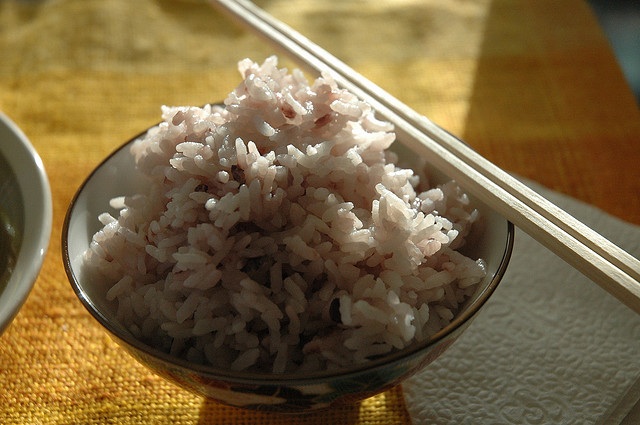
I first heard of arsenic from the movies. It was an effective way to poison someone, and it went with old lace. Recently, we were warned about arsenic content in apple and grape juices, and now Consumer Reports has published findings about “troublesome” levels of arsenic in rice and rice products, from baby cereal to pasta. Reports such as these often lead people to question what foods are actually safe these days—and specifically with rice—can we still eat it?
A more fundamental question is what is arsenic and where does it comes from?
There are actually two different types of arsenic at play here: organic arsenic, which occurs naturally in the Earth and is supposedly not quite as toxic to our bodies as inorganic arsenic, which is manmade and the result of practices such as coal-burning or pesticide use. The danger is that inorganic arsenic has been linked to several different types of cancers, including skin, bladder, and lung, as well as heart disease and developmental problems.
Inorganic arsenic is actually present in many healthful foods as well as our drinking water but in amounts generally regarded as safe by the FDA (that is ten parts per billion). However, rice absorbs much more arsenic than other foods at levels above what is considered safe, thereby putting rice under the proverbial microscope.
Click to see the results of Consumer Reports’ limited study.
Although the FDA has begun testing thousands of rice and rice-derived products, which could take several years, the agency is reluctant to offer guidelines for consuming rice.
So what should we do in the meantime? Although the jury is still out, I am not avoiding rice completely. I like what Dr. David Katz imparted: “Cancer rates are generally low where rice intake is highest.” But the rest of the world also prepares rice differently from the way we do, and, coincidentally, these methods are now recommended as strategies to reduce the arsenic content in rice and your diet.
5 Tips to Reduce Arsenic
1. Buy Imported Rices. Rice from the Southern U.S. (Arkansas, Texas) seems to have the highest concentration of arsenic. California rice has less, but the rice, especially basmati and jasmine varieties, from Thailand and India have the least.
2. Rinse It. Rinsing your rice in water helps to reduce arsenic by about twenty-five percent.
3. Soak It. Soaking your rice anywhere from one to eight hours will not only reduce the arsenic in the rice but also make the grain more digestible.
4. Cook It in Copious Amounts of Water. Instead of cooking one cup of rice in two cups of water, treat it like pasta and boil it in lots of water until tender.
5. Eat a Wide Variety of Foods. The concern over arsenic and rice underscores the notion that an important component of a healthful diet is to consume a wide variety of foods, not only to ensure consumption of the full spectrum of nutrients, but also to limit overexposure to harmful toxins. Alternatives to whole rice include: quinoa, millet, spelt, wheat berries, and farro.
If you are concerned about rice or your favorite rice products, contact the manufacturer, who should be willing to tell you if their products have been tested and how much arsenic has been discovered. At the end of the day, we may think of arsenic as a dirty word, but there are plenty of other toxins we consume liberally without thinking twice.







12 Comments
Does organic brown rice from Mexico have high levels of arsenic?
Thank you,
Michael
Brown rice generally has more arsenic than white. And whether a rice is grown organically or conventionally doesn’t make a difference in the arsenic levels. I have not seen data on rice grown in Mexico, however.
Just recently discovered your site and what a treasure! So much information and wonderful recipes – I love it. Honestly, this is the first time reading about rice and arsenic, so I have a question. I went gluten free a year ago, and dairy free about 6 months ago. I have found that almond milk (and almond butter and flour too) gives me wicked gas (ugh). Really terrible. So, I’ve been using organic rice milk. I suppose I should be concerned now? Any advice would be so helpful. Thanks!
Thank you, Jen. So happy you’re here. I know several people who have an intolerance to almonds. If you’re up for it, would you consider trying to make your own almond milk? It’s really easy and I have step-by-step directions on my site. If the almonds are soaked and you take the skins off, I know that will help the digestibility of the almonds, which sounds like your issue, as opposed to an allergy. Just a thought. And yes, I would be concerned about rice milk, especially if you are consuming it regularly. Have you tried other nut milks or hemp milk? You can make non-dairy milk with any nut or seed the same way you make almond milk. I’ve made hazelnut milk before and that was tasty! I use hemp milk a lot in place of regular milk. Cashew milk is also awesome, but a little richer so I use a tad more water. Of course you can buy these at the store as well ;). Just stay away from soy milk — not healthful!
I’m going to try hemp milk and making my own almond milk! I must admit to consuming a significant amount of rice milk..which I will stop! Thanks for your reply and advice. x
Anytime! Very curious to see how you react to homemade almond milk using soaked almonds.
Thank you, Pamela, for making me aware of this. This is perhaps an obvious/dumb question but I’m wondering if I need to also soak organic brown rice?
Excellent question! Organic rice and conventionally-grown have equal amounts of arsenic. And brown rice has more arsenic than white. So, YES, you should soak brown rice. 🙂
Hi Pamela, do you know if mexican rice has high contents of arsenic? Thank you,NP
I have yet to see Mexican rice named in any of the studies I have seen. With respect to produce, Mexico is considered to have the most widespread use of pesticides and fertilizers, so if I were to guess, rice grown in Mexico would be quite contaminated with arsenic. This is just a hypothesis, however.
This is great information and truly worthy of a post. In my own research on this topic, I agree that buying rice from Asian countries is the best way to go as their farming practices, especially those concerning livestock, differ greatly from those in the US. I also agree that rinsing is very important. Rice, brown rice in particular, is an excellent dietary staple that we should not feel a need to omit from our meals.
Well put, Julie!